What the slow blink actually says
You have probably done it without thinking: met your cat's eyes across the room and let your own lids fall, slowly. Science has now watched what happens next.
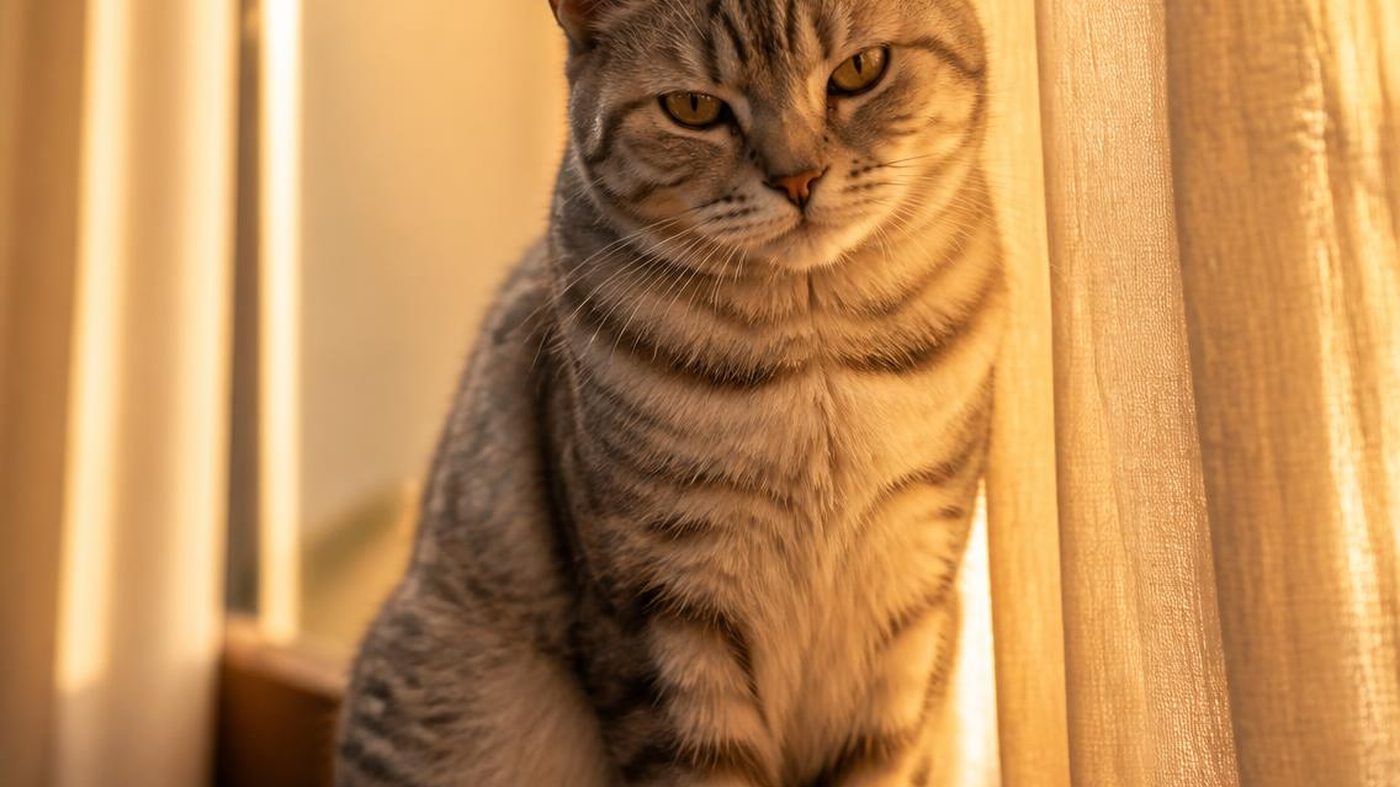 AI-generated
There is a moment that cat people know and rarely talk about. The room is quiet, your cat is looking at you from the arm of the sofa, and without deciding to, you narrow your eyes and let them close for a breath. She answers. The lids come down, slowly, and open again. Nothing has been said. Everything has.
For a long time this was folklore — the kind of thing people who love cats believed and people who didn’t love cats found faintly silly. In 2020, a team at the University of Sussex decided to test it.
Three things the research found
The blink is a real signal, not a coincidence. In the first experiment, owners sat a short distance from their cats and were asked to slow-blink at them. Cats were significantly more likely to slow-blink back at their person than when the person simply sat in the room without doing it (Humphrey et al., 2020, Scientific Reports). The cats were answering.
It works with strangers, too. In the second experiment, the researcher — someone the cat had never met — slow-blinked at the cat. Not only did the cats blink back more often; they were more likely to approach an outstretched hand afterwards than when the stranger kept a neutral face. A narrowed eye, offered first, read as I am no threat to you in a language older than either of you.
It is probably a softened version of something ancient. The researchers suggest that the half-closed eye is what a cat does when she is at ease — a relaxed face with no hard stare in it. A direct, unbroken stare is what hunters and rivals do. Letting the eyes go soft is the opposite of that. When you do it on purpose, you are speaking her dialect.
Deepening the bond
Sit a little way from your cat, at her eye level if you can. Don’t lean in. Meet her eyes, then let yours close slowly — a full second down, a full second up — and look away a little afterwards. Don’t expect an answer every time; cats answer when they decide to. When it comes, you’ll know.
What stays a mystery
The study tells us that cats answer, and that the answer carries trust. It does not tell us what the blink feels like from inside a cat. That part is still hers.
Research suggests; it does not prove. The study used 21 cats in the first experiment and 24 in the second — small numbers, consistent results.
Read next: What whiskers know
Sources
- Humphrey, T., Proops, L., Forman, J., Spooner, R. & McComb, K. (2020). The role of cat eye narrowing movements in cat–human communication. Scientific Reports, 10, 16503.
General information, not veterinary advice. The cat photos on this site are AI-generated.