The twelve weeks that shape a kitten
Somewhere between week two and week seven, a kitten decides what the world is. Hands, voices, the kettle — she files it all away. This is the window.
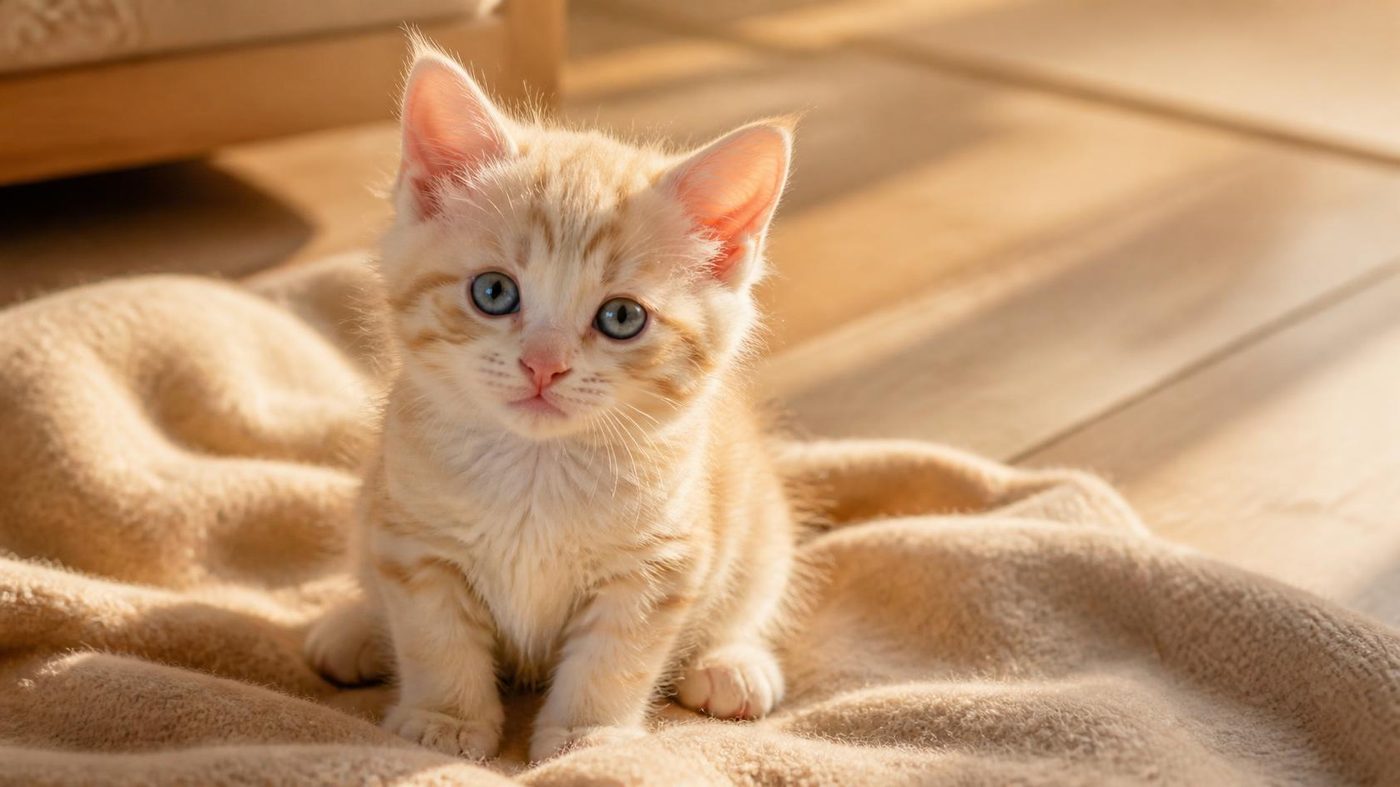 AI-generated
At three weeks old, a kitten’s ears finally stand up. Nobody tells her. She just wakes up one morning and hears the world properly for the first time — the fridge, the rain, a voice that will later mean food and you.
What happens in the next few weeks is one of the most studied things in cat science, and one of the most tender.
Three things worth knowing
There is a window, and it is early. Research going back to the 1980s found that kittens handled gently by people between roughly two and seven weeks of age grow up more confident around humans — quicker to approach, calmer when picked up (Karsh & Turner, 1988). Later handling still helps, but the deep groove is cut early. This is the time science calls the socialisation period. We call it the weeks she learns to trust.
Variety counts more than quantity. In those studies, kittens handled by several different people were more relaxed with strangers later than kittens handled by only one. A few minutes each with a few gentle hands — different voices, different smells — teaches a small brain that people, in general are safe, not just one person.
Everything is being filed. Floors, carriers, the sound of a vacuum two rooms away, a dog seen through a window: what a kitten meets calmly now, she meets as a friend later. What she doesn’t meet, she will meet as a stranger. This is why a quiet, curious kitten who has seen a little of everything often becomes the easy-going adult cat everyone wants to sit next to.
Deepening the bond
If you have a kitten in this window: let her meet one new thing today, gently, at her pace. A different room. The carrier, left open on the floor with a blanket in it. A friend who sits on the floor and lets her come over. Don’t engineer it; just open the door.
If your cat is already grown, you are not too late for anything. The window is for the deepest groove; the rest of a life is for everything else.
What stays a mystery
We know when a kitten learns to trust. We still don’t know what it is like, from inside, to be three weeks old and hear the world for the first time. That part, she keeps.
Research suggests; individual kittens vary. The classic studies are small and old; newer work broadly confirms them.
Read next: Why cats knead
Sources
- Karsh, E. B. & Turner, D. C. (1988). The human–cat relationship. In D. C. Turner & P. Bateson (Eds.), The Domestic Cat: The Biology of its Behaviour. Cambridge University Press.
- McCune, S. (1995). The impact of paternity and early socialisation on the development of cats’ behaviour to people and novel objects. Applied Animal Behaviour Science, 45, 109–124.
General information, not veterinary advice. The cat photos on this site are AI-generated.