The lucky black cat · Britain & Japan
In some stories she crosses your path and the day turns dark. In older ones, from the Scottish coast to the streets of old Edo, she arrives at the door and brings good fortune with her.
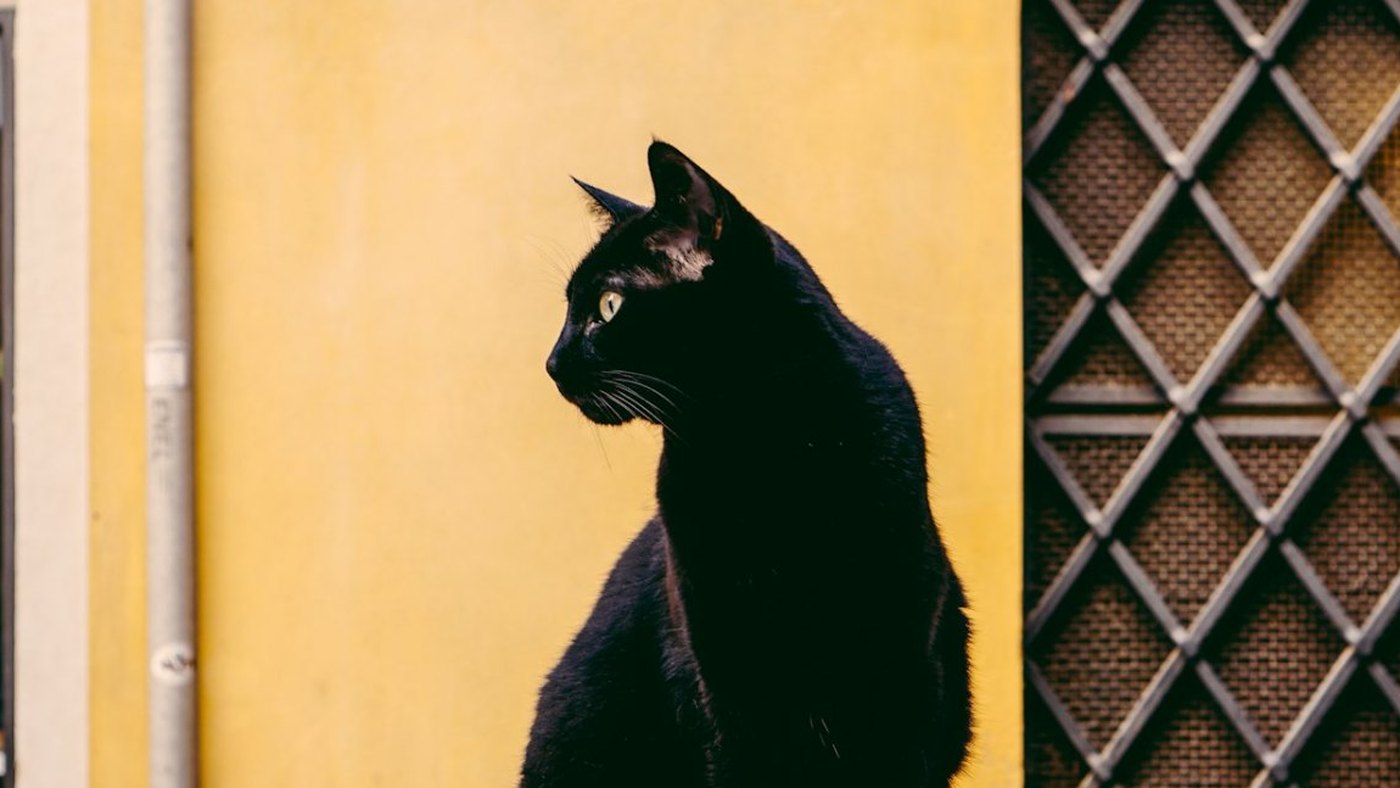 Photo: Unsplash
Every October the black cat returns, in paper silhouettes and shop windows, arched against an orange moon. It is easy to forget that in many places she was never a warning at all.
A guest at the Scottish door
In Scotland, an old belief held that a strange black cat arriving on your doorstep brought prosperity with her. You did not chase her away. You let her in, and the house was the richer for it.
The cat who brought the sailors home
Along the coasts of Britain, the wives of fishermen and sailors were said to keep black cats at home, so that their husbands would return safely from the sea. Ships, too, were thought luckier with a black cat on board. A small dark shape asleep by the hearth stood for someone coming home.
Crossing your path
In much of Britain, a black cat crossing in front of you has long been read as good luck, the very opposite of the meaning it carries in other parts of the world. The same cat, the same path, and two different stories about her.
Japan: protection and admirers
In Japanese folk tradition, black cats are linked with good fortune and with keeping harm away. In the Edo period, so it is told, a black cat was believed to draw admirers to a young woman still waiting for love. And the beckoning cat, maneki-neko, also comes in black, the colour said to keep misfortune at bay.
Older still
Long before any of these stories, cats were honoured in ancient Egypt, where the goddess Bastet, protector of home and hearth, was often shown with the head of a cat.
What stays a mystery
Why the same small cat came to mean fortune in one harbour and fear in another, no one can quite say. Perhaps every story tells us more about the people telling it than about her. And perhaps, if you meet her on your way home tonight, you may choose which story to believe.
Folklore is told, not proven. These beliefs differ from region to region and have changed over the centuries.
Read next: The beckoning cat · Japan
Sources
- Roud, S. (2003). The Penguin Guide to the Superstitions of Britain and Ireland. Penguin.
- Malek, J. (1993). The Cat in Ancient Egypt. British Museum Press.
Folklore and cultural history, told with care. Photos: Unsplash.