Living in Tune with Her Nature: ideas for every cat personality
A herb tasting for the Explorer, a window timetable for the Contemplative, a Sunday custom for the Keeper of Rituals. Ideas you would not stumble on by yourself.
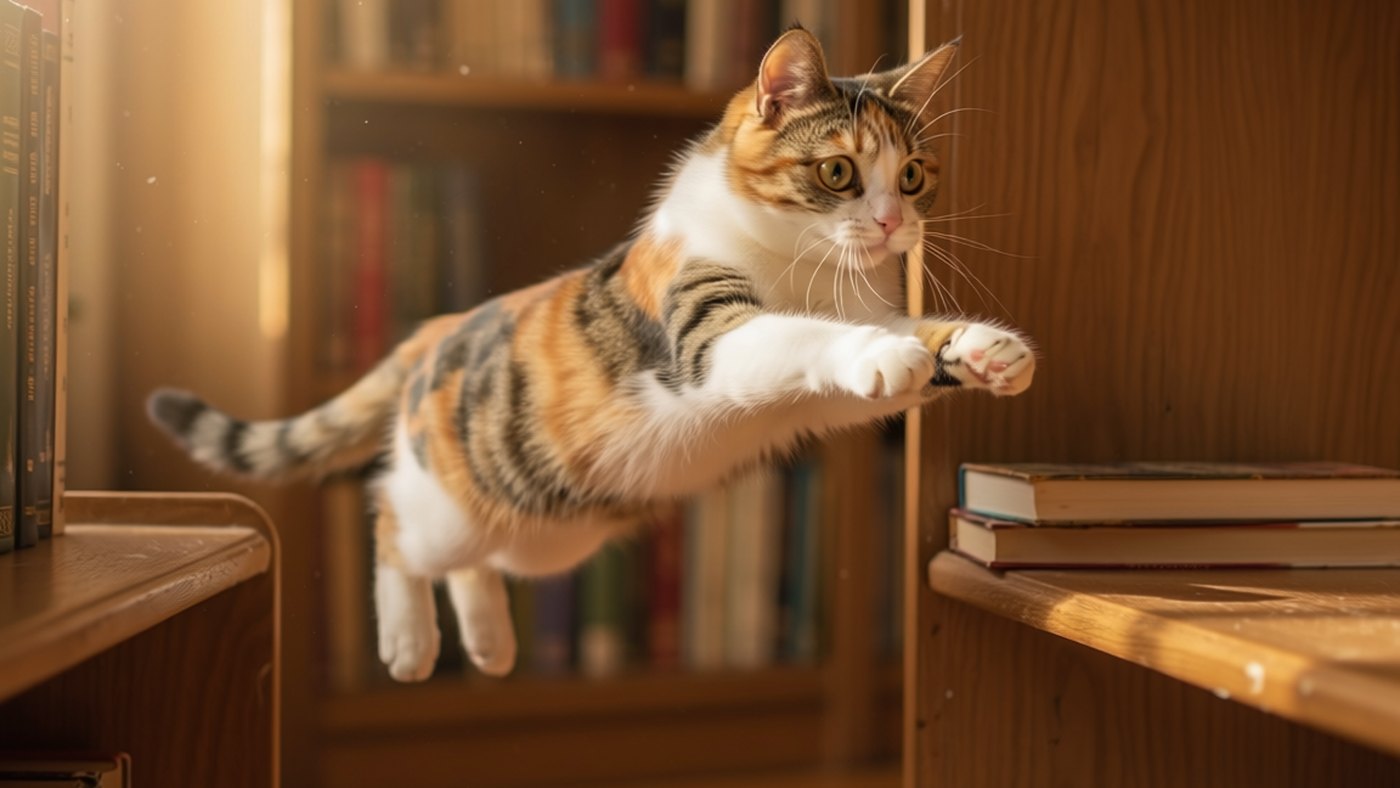 AI-generated
Ad — this article contains affiliate links, marked “(ad)”. If you buy through them, CatMind Studio earns a small commission at no extra cost to you. As an Amazon Associate we earn from qualifying purchases.
No two cats are alike. One conquers every door the moment it opens a crack. Another reads the world from the windowsill and ends up knowing just as much. The feline medicine guidelines describe what every cat needs from a home: a safe retreat, separate places for food, water and rest, play and the hunt, kind and predictable contact with people, and respect for her fine sense of smell (Ellis et al., 2013). What those things should look like for her is something her nature tells you. If you would like to discover it in even more depth, our Personality Portrait describes in depth which facets shine brightest in your cat. Our free personality test gives you a first glimpse.
Almost every cat already has a scratching post, a box and a puzzle feeder. So here are the ideas you would not stumble on by yourself, gathered around the five facets of a cat's personality. Most cost nothing but a little attention. Where an object makes an idea more beautiful, we link straight to the product. We leave prices out on purpose, because they change all the time.
Curiosity: a world that keeps a small secret for her every day
For the Explorer: the herb tasting. Fill an old sock with dried catnip, the next week one with valerian root, then offer her a silvervine stick. Many cats who barely react to catnip respond to one of the others (Bol et al., 2017). Or the travelling wicker ball: with a treat inside, it goes on a journey every night, to the third stair, into a slipper. Soon her day begins with the question of where it has landed.
For the Contemplative: the window timetable. Each window shows its best programme at a different hour, the east window the blackbirds at dawn, the street side the comings and goings of the afternoon. Move her blanket along this timetable for a week and see where she stays longest. Or the museum of the week: every Sunday a new exhibit appears on a stool within her sight, a feather, a sprig of rosemary, a stone from the beach. Count the days until she studies it up close.
Sensitivity: a home that honours her fine senses
For the Finely Tuned: the listening walk. Kneel at her ear height in every room for a minute and listen: the hum of the fridge, the tick of the radiator. Move her places away from the loudest sound. And the signal: before the vacuum starts, say one soft word, always the same, and afterwards a second word that means “over”, with a treat at her spot. Every change announces itself, and every change passes. A second, quiet water place away from her food belongs here too, such as the Necoichi raised cat water bowl (ad).
For the Serene: the paw path. Lay five surfaces in a row along the hallway, a cork coaster, a towel, corrugated card, linen, a coir mat, with a treat at the end. And the visitor card for guests: “Please don't pick her up. Offer a hand and wait. She loves the feather wand.” Now she is the hostess.
Presence: a realm where her yes and her no are heard
For the Sovereign: the cheek seal. A soft brush fixed at cheek height on a door corner she often rounds, and she sets her scent seal in passing. Add a high road of shelves with a single treat waiting at its highest point every morning, like a toll her realm pays her. A beautiful highest point is the Catit Vesper High Base (ad).
For the Gentle Diplomat: her own pantry. In a place only she uses stands a small bowl, and every evening you quietly lay three treats in it. A treasure she never has to ask for. And the cat question: offer your hand at nose height with loosely curved fingers, and wait. When people let cats choose and stroke mainly the head and cheeks, cats show more friendly behaviour (Haywood et al., 2021).
Rhythm: steady anchors for one, surprises for the other
For the Free Spirit: the prey of the week. Each week the feather wand has a different character, a mouse darting along the floor, a bird flying in arcs, a beetle trembling on the spot. Notice which one makes her pupils widest. In a study of 355 cats, five to ten minutes a day of play with prey that could be caught clearly changed their hunting outdoors (Cecchetti et al., 2021). The Da Bird feather wand (ad) whirs like a bird in flight, and on Saturdays a die decides what you play.
For the Keeper of Rituals: the Sunday custom. One small thing happens only on Sundays, the velvet blanket on the windowsill or the long brushing hour. And the sundial of her places: for a week, mark on a little floor plan where she lies in the morning, at noon and in the evening. Often it turns out she follows the light from room to room.
Affection: closeness in her language
For the Openly Affectionate: the brush hour. With a new, very soft toothbrush, stroke her forehead, cheeks and chin in short strokes, the way her mother's tongue once groomed her. And the echo: answer her in her own rhythm, short for short, long for long. In a choice test, half of the cats preferred time with a person above food and toys (Vitale Shreve et al., 2017).
For the Quietly Devoted: the distance she chooses. Place a cushion just for her beside your favourite seat, an arm's length away at first, and move it a hand's width closer each week. If she stays, she is pleased; if she moves, you have learned her favourite distance. And the slow blink: cats often return it and approach more readily afterwards (Humphrey et al., 2020).
For the person at her side
Kitty Language by Lili Chin (Amazon, ad) shows feline body language in drawings full of grace. And Play With Your Cat! by behaviour researcher Mikel Delgado (Amazon, ad) is about the art of playing so that a cat feels like a huntress.
Which idea she loves, only she can tell you. Try whatever makes you smile, and watch her. Sometimes a cat adores exactly the thing nobody expected.
Read next: What the slow blink actually says
Sources
- Ellis, S. L. H. et al. (2013). AAFP and ISFM Feline Environmental Needs Guidelines. Journal of Feline Medicine and Surgery, 15(3), 219–230.
- Dantas, L. M. S. et al. (2016). Food puzzles for cats: feeding for physical and emotional wellbeing. Journal of Feline Medicine and Surgery, 18(9), 723–732.
- Haywood, C. et al. (2021). Providing humans with practical, best practice handling guidelines during human-cat interactions increases cats’ affiliative behaviour and reduces aggression and signs of conflict. Frontiers in Veterinary Science, 8, 714143.
- Cecchetti, M. et al. (2021). Provision of high meat content food and object play reduce predation of wild animals by domestic cats. Current Biology, 31(5), 1107–1111.
- Vitale Shreve, K. R. et al. (2017). Social interaction, food, scent or toys? A formal assessment of domestic pet and shelter cat preferences. Behavioural Processes, 141, 322–328.
- Bol, S. et al. (2017). Responsiveness of cats (Felidae) to silver vine (Actinidia polygama), Tatarian honeysuckle (Lonicera tatarica), valerian (Valeriana officinalis) and catnip (Nepeta cataria). BMC Veterinary Research, 13, 70.
- Humphrey, T. et al. (2020). The role of cat eye narrowing movements in cat–human communication. Scientific Reports, 10, 16503.
General information, not veterinary advice. The cat photos on this page are AI-generated.