How much should a cat drink?
Cats evolved in dry places and learned to take most of their water from prey. That history still shapes how they drink today — and it explains a few things about the water bowl.
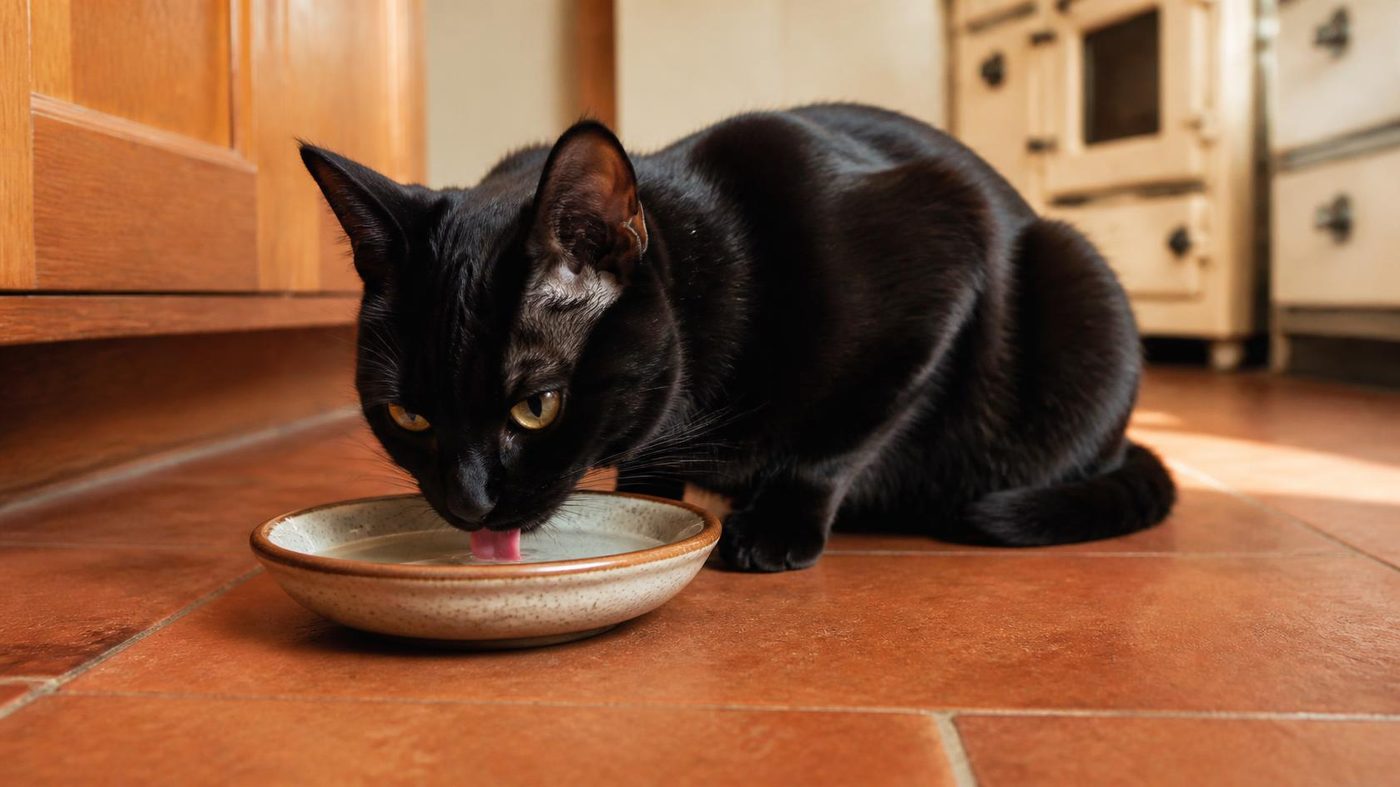 AI-generated
The domestic cat descends from the African wildcat, a small hunter of semi-arid country. Her ancestors rarely drank from standing water; they got most of what they needed from the bodies of the animals they ate, which are roughly seventy per cent water. Our cats have inherited that physiology. It is one of the quiet reasons a cat can seem indifferent to a bowl that a dog would have emptied by noon.
Three things worth knowing
A rough figure, and why it is only rough. Veterinary references put a healthy cat’s total water need at roughly 50–60 ml per kilogram of body weight per day — around 200–250 ml for a 4 kg cat. But that figure includes water from food. A cat eating mostly wet food takes in a large share of it that way and may drink very little; a cat on dry food has to make up the difference at the bowl. So the amount in the bowl tells you less on its own than you might think. Your vet can tell you what fits your cat’s age, weight and history.
Where the water lives matters. Many cats prefer not to drink next to where they eat — in the wild, water near a carcass is water you avoid. A second water station in a different room, away from the food, often gets more use than the first. Wide, shallow bowls spare the whiskers. Fresh is noticed; cats are not shy about rejecting water that has stood for a day.
Moving water is interesting water. Running taps, fountains and dripping bath taps draw cats for a reason: moving water is, to an ancient nose, fresher and safer than still water. A small fountain is one of the few gadgets that earns its place for many cats — though not all; some will drink from a glass on the bedside table and nothing else, and that is fine too.
Deepening the bond
Put a second bowl somewhere your cat spends time — a windowsill, a quiet corner — away from the food. Refresh both bowls once a day. Over a week, notice which one goes down. That is information, and it is yours to bring to the next vet visit.
When to mention it to your vet
A change in drinking — noticeably more, or noticeably less than usual for your cat — is one of those small things worth saying out loud at the next appointment. Not a worry; a note. Cats are good at keeping their own counsel, and a line in a record can make a conversation easier.
General information, not veterinary advice. Figures are references, not targets; your vet knows your cat.
Read next: The Cat Gift Guide 2026 — twelve things a cat would choose
Sources
- National Research Council (2006). Nutrient Requirements of Dogs and Cats. National Academies Press.
- International Cat Care — Advice: Water and drinking in cats (icatcare.org).
General information, not veterinary advice. The cat photos on this site are AI-generated.